Serving Prescott, Prescott Valley, Chino Valley, and surrounding Yavapai County communities.
"Should I convert my tub to a walk-in shower?" is one of the most common questions we hear in Prescott bathroom remodels. The answer depends on your household, how you use your bathrooms, and what Prescott buyers are looking for. Here's how to think through it.
| Factor | Walk-In Shower | Bathtub |
|---|---|---|
| Daily Use Convenience | Faster, easier entry | Requires step-over |
| Accessibility (Aging) | Superior, especially curbless | Fall risk for mobility issues |
| Space Efficiency | Can fit 36"x36" | Requires 5' alcove minimum |
| Families With Kids | Less convenient for bathing children | Very practical |
| Cleaning | Easier (no tub to scrub) | Tub interior requires scrubbing |
| Conversion Cost | $10,000–$22,000 installed | $600–$3,000 tub swap |
| Resale: Primary Bath | Neutral to positive | Expected by many buyers |
The most-asked-about issue is resale. The conventional wisdom used to be that removing the only tub in a home hurts resale. That's still true — but with nuance.
If your home has only one bathroom, or if the home you're remodeling is the only bathroom with a tub, many buyers — especially families with young children — will pass on the home or offer less. National Association of Realtors data consistently shows that homes with at least one tub sell faster and at closer-to-list-price than homes with zero tubs. The key phrase is "at least one."
If your home has at least one other bathroom that retains a tub, converting the primary bathroom to a walk-in shower is typically neutral or positive for resale. Primary bathrooms are increasingly shower-dominant. Prescott's significant retired and empty-nester population (people who don't bathe children) skews toward preferring a large walk-in shower over a bathtub in the primary suite.
Prescott has a substantial retirement and semi-retirement population. For these buyers, a walk-in shower — especially a curbless or low-threshold design — is not just neutral but actively preferred. Aging-in-place accessibility is a real concern, and barrier-free showers eliminate the step-over that causes falls. If your target buyer profile skews over 55, a well-designed walk-in shower may actually be more appealing than a tub.
If you use your tub — regularly for soaking, for bathing children, or for therapeutic purposes — keep it. A great tub that you use regularly is worth more than a shower you'd marginally prefer. The question "what will buyers want?" only matters when you're selling. Until then, what you want matters most.
If you love soaking baths and want the space efficiency of a walk-in shower, the best solution is often a freestanding soaking tub in the primary bath alongside a separate walk-in shower — which delivers both without compromise when the bathroom has room for it.
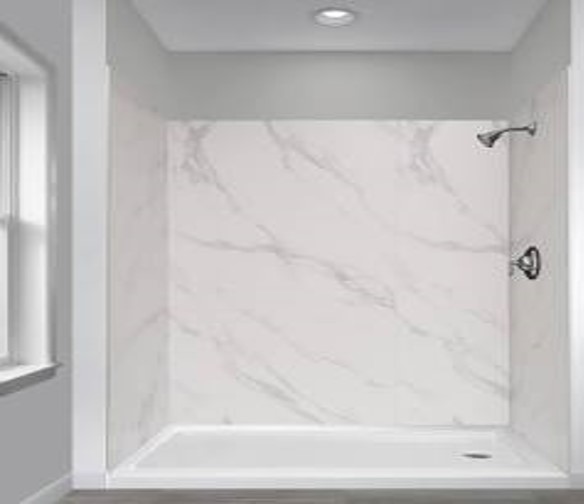
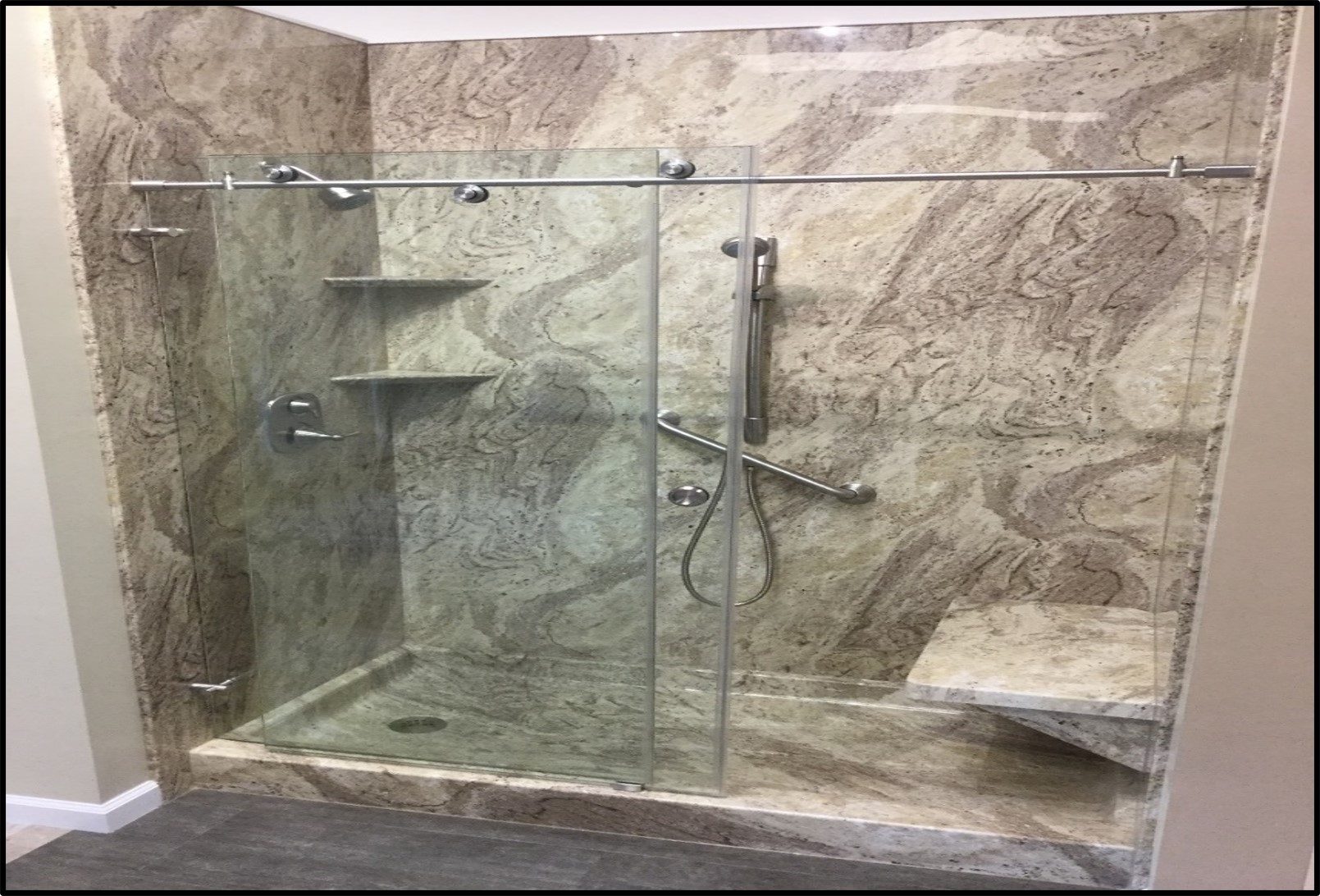
Converting an alcove tub to a walk-in shower in the same footprint typically runs $10,000–$22,000 at Infinity Kitchen and Bath, including demo of the tub, new shower pan or liner, tile or solid-surface walls, frameless glass enclosure, new fixtures, and associated plumbing. The exact cost depends on tile choice, glass configuration, and whether curbed or curbless. See our detailed walk-in shower cost guide for a full breakdown.
Only if your home has at least one other bathroom with a tub, you personally don't use baths, and you want the convenience and accessibility of a walk-in shower. If you're the last tub in the house, think carefully — or consider keeping a compact soaking tub alongside the shower.
Yes. A tub-to-shower conversion can be done as a standalone project — the existing plumbing lines are typically in the right location, minimizing rough-in work. You can get a new walk-in shower without touching the vanity, toilet, or floor outside the shower area. We often do these as focused projects in 1–2 weeks.
IRC code requires a minimum 30"x30" shower interior, but that's uncomfortable. A 36"x36" is workable; 36"x48" is comfortable for most people. 48"x48" is considered spa-like. In the footprint of a standard 5-foot alcove tub, you have 30"x60" to work with — enough for a comfortable 36"x48" shower with some room for a bench or niche.
Yes. Without a curb to step over, there's no corner where mold and soap scum accumulate. A curbless shower also visually expands a small bathroom by eliminating the visual break at the floor. The floor simply needs adequate slope toward the drain, which we build in during installation.
We specialize in tub-to-shower conversions in Prescott, Prescott Valley, and Chino Valley. Let's design yours.