Serving Prescott, Prescott Valley, Chino Valley, and surrounding Yavapai County communities.
Most Prescott homes built between the 1970s and 1990s have closed kitchens — walls separating the kitchen from the dining room or living area. Whether to open them up is one of the most consequential decisions in a kitchen remodel. Here's what you need to know before deciding.
| Factor | Open Concept | Traditional (Closed) |
|---|---|---|
| Feel & Flow | Spacious, connected, social | Defined, contained, focused |
| Cooking Smells & Noise | Spread throughout home | Contained in kitchen |
| Wall Cabinet Space | Reduced (fewer walls) | Maximum storage |
| Resale Appeal | Very popular with buyers | Niche appeal |
| HVAC Impact | May need rebalancing | No change |
| Project Cost | +$5,000–$30,000 for wall removal | Standard remodel cost |
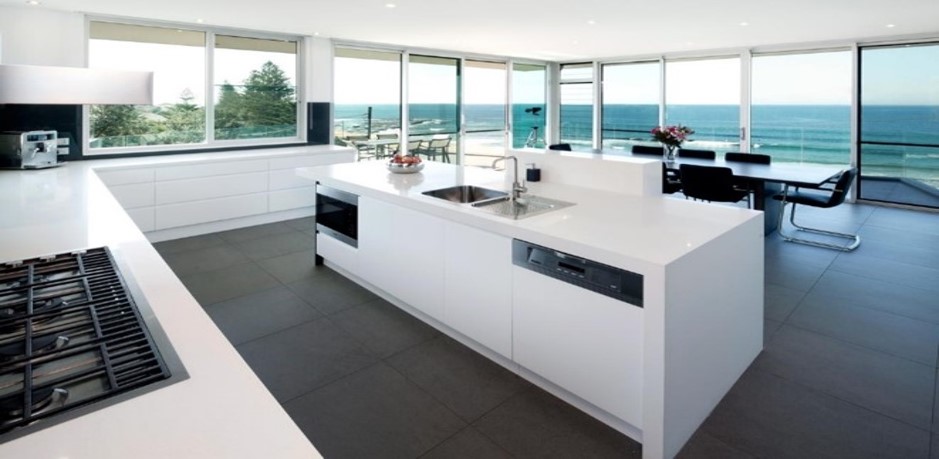
Open concept kitchens dominated new construction and remodeling trends for 20+ years for good reason: they feel bigger, flow better for entertaining, and allow the cook to be part of family activity rather than isolated behind a wall. In Prescott's mid-size homes, removing a wall between the kitchen and a small dining room can make a 1,400 sq ft home feel significantly larger without adding square footage.
If you host gatherings, the cook doesn't want to be separated from guests. Open plans allow casual entertaining where guests can be at the island while you prep. They also allow parents to monitor children in adjacent living spaces while cooking. For most modern lifestyles, this connectivity is a real quality-of-life improvement.
Open concept kitchens are consistently rated a top-priority feature by homebuyers. In Prescott's real estate market — where many listings are older homes with traditional layouts — an open-concept kitchen remodel can differentiate your home and support a higher asking price.
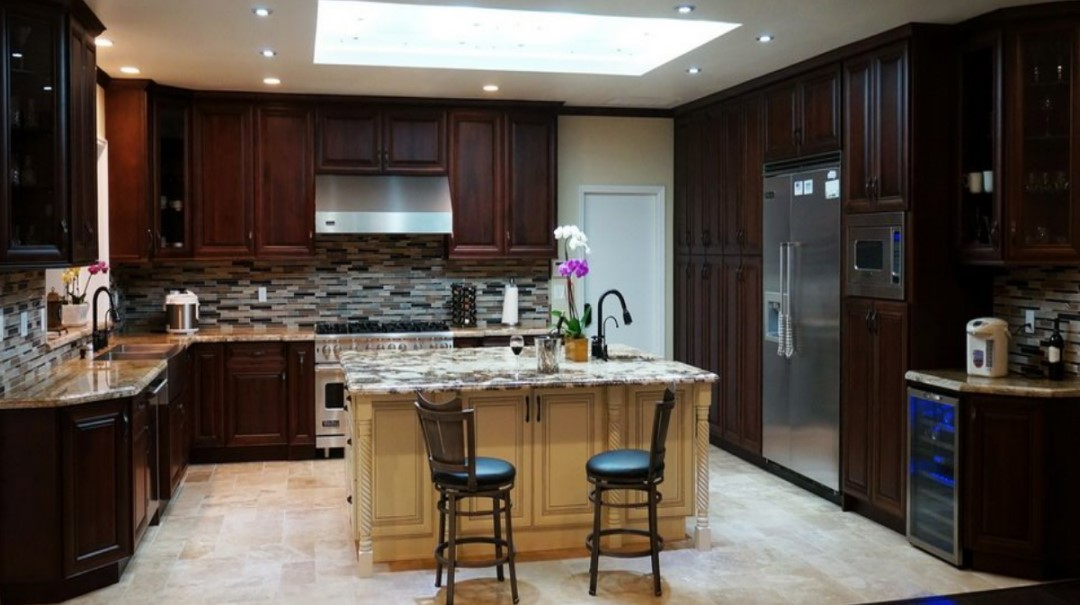
Traditional layouts are making a quiet comeback, and not without reason. Open concept kitchens have real drawbacks that years of living in them expose.
When you open the kitchen to the living area, everything that happens in the kitchen — frying smells, range hood noise, dishwasher cycles, blender noise — becomes part of the entire house experience. For households where cooking involves strong aromas (garlic, fish, spices) or where someone is working from home nearby, this matters more than buyers realize before they have the open plan.
Walls hold cabinets. Remove walls and you lose upper cabinet run. For Prescott homeowners who are heavy cooks with a lot of cookware, appliances, and pantry goods, this can be a practical problem. The solution is often a walk-in or reach-in pantry cabinet added elsewhere in the kitchen to compensate.
Some households prefer clear definition between the kitchen and living areas — especially empty-nesters, couples without children, or households where a TV or home office is adjacent to the kitchen. A traditional layout gives each room a purpose and an end.
Before making any decisions, a structural assessment is essential. Many Prescott homes built in the 1970s–1990s have walls that carry roof or floor loads — you can't simply remove them without a structural solution. A load-bearing wall can still be removed, but requires a beam (typically LVL or steel) to carry the load, support columns, and sometimes foundation work. This adds $8,000–$25,000+ to the project depending on the span.
A non-load-bearing partition wall costs far less to remove: typically $2,000–$5,000 including patching floor, ceiling, and any electrical or plumbing rerouting. Infinity Kitchen and Bath can assess your wall and refer to a structural engineer when needed — don't attempt to determine load-bearing status without a professional opinion.
Opening a closed kitchen into a larger space changes the heating and cooling zone. Your existing duct layout may have been designed around defined rooms. After opening, you may experience inconsistent temperature — the kitchen gets too cold from the AC that was sized for the living room, or vice versa. A quick consultation with an HVAC contractor before or after the remodel can prevent this.
A general rule: walls that run perpendicular to floor/ceiling joists are more likely to be load-bearing; walls running parallel often are not. But this is only a guideline — exceptions exist. The only reliable way to know is to have a contractor or structural engineer assess it. At Infinity Kitchen and Bath, we evaluate wall structure during the initial consultation.
Yes. A half-wall (knee wall) or a pass-through opening can create visual connectivity and natural light without fully opening the space. This is a cost-effective middle ground that works particularly well when the wall is load-bearing, as a smaller beam may suffice.
If the wall is load-bearing, yes — a structural permit is required from the City of Prescott or Town of Prescott Valley depending on your location. Non-structural partition walls may not require a permit, but it depends on jurisdiction. See our Yavapai County permit cost guide for details. We handle permitting as part of the project.
Often better than a closed one. In homes under 1,500 sq ft, a wall between kitchen and dining/living can make every room feel smaller and darker. Opening it up can transform the feel of the entire home for a modest cost relative to a full remodel.
We'll assess your walls, review layout options, and provide a full estimate. Serving Prescott, Prescott Valley, Chino Valley, and surrounding areas.