Serving Prescott, Prescott Valley, Chino Valley, and surrounding Yavapai County communities.
Butcher block brings warmth and character that engineered stone can't replicate. Quartz brings durability and low maintenance that wood can't match. Both can work beautifully in a kitchen — but they serve different homeowners in different kitchens. Here's how to decide.
| Category | Butcher Block | Quartz |
|---|---|---|
| Installed Cost | $35–$65/sq ft | $55–$120/sq ft |
| Heat Resistance | Moderate (scorches) | Moderate (resin can discolor) |
| Water Resistance | Low (needs sealing) | Excellent |
| Scratch Resistance | Low (scratches easily) | High |
| Maintenance | Oil monthly, sand to restore | Wipe clean, no sealing |
| Repairability | Excellent — sand & refinish | Chips are difficult to repair |
| Aesthetic | Warm, organic, rustic/farmhouse | Modern, uniform, wide styles |
Butcher block countertops are made from strips of hardwood — most commonly maple, walnut, or teak — glued together edge-grain or end-grain. End-grain is the premium option (think cutting board pattern); edge-grain is more common for countertops and more resistant to warping.
Prescott's high desert climate creates a real challenge for wood countertops that most homeowners overlook. At 5,400 feet elevation with low humidity (often 10–30% in summer), wood dries out faster than in coastal or humid climates. Unsealed or under-maintained butcher block can crack, split, or warp — especially near the sink or dishwasher where moisture levels fluctuate. If you choose butcher block in Prescott, oiling every 4–6 weeks (not monthly as in humid regions) is essential.
It's the only countertop material you can sand back to new. Cut a deep groove, burn it, stain it — you can restore it with a belt sander and food-safe finish oil. That repairability is a genuine advantage. Butcher block also brings visual warmth that no stone or engineered surface replicates — it transforms a kitchen from polished to lived-in in a way many homeowners find deeply appealing.
The most common and most successful use of butcher block in Prescott kitchens is as an island countertop paired with quartz on the perimeters. You get the warmth and character of wood where you prep food, and the durability of quartz near the sink and cooktop. This combination is popular in farmhouse, craftsman, and transitional kitchen designs.
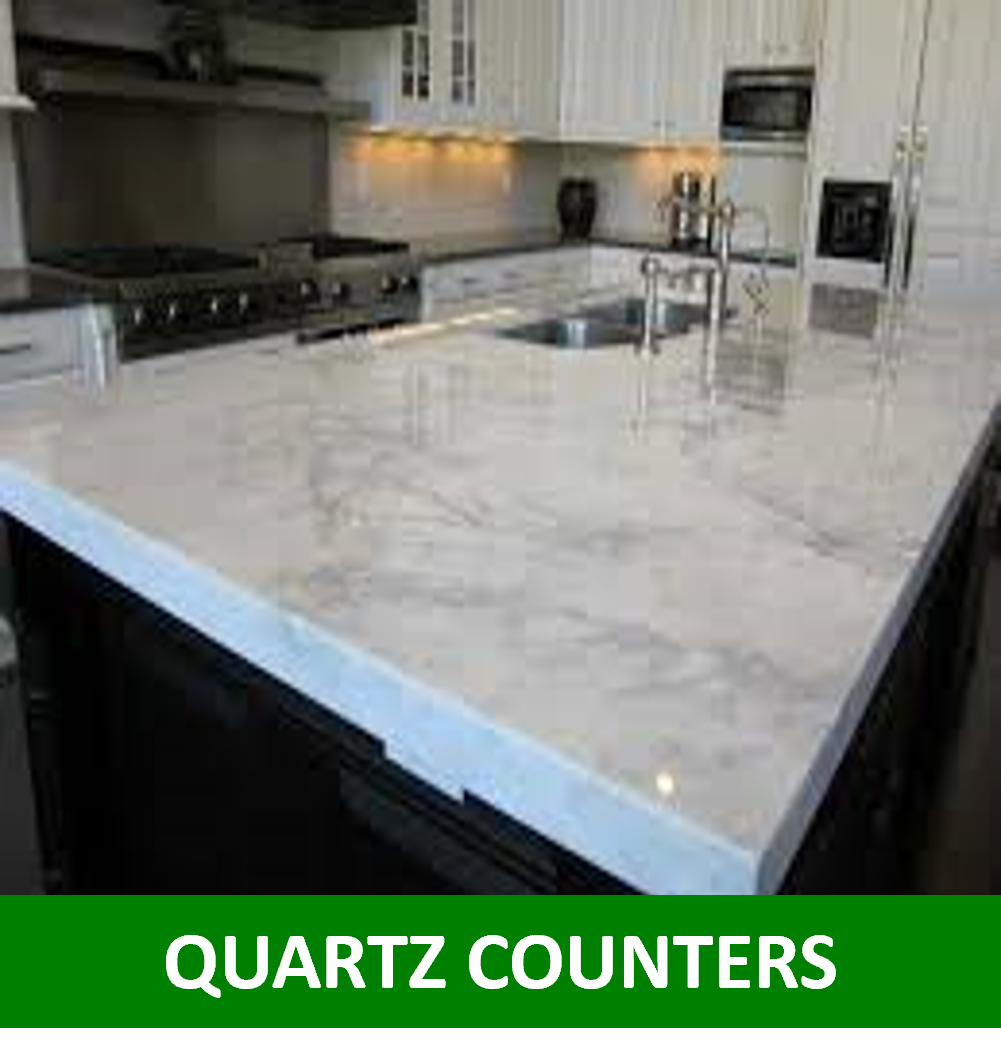
Quartz countertops are engineered stone — 90–95% crushed quartz mineral bound with polymer resins and pigments. They're non-porous, consistent in appearance, and require no sealing. The resin binder means they're less heat-resistant than granite (never put hot pans directly on quartz), but for everyday use, they're nearly indestructible.
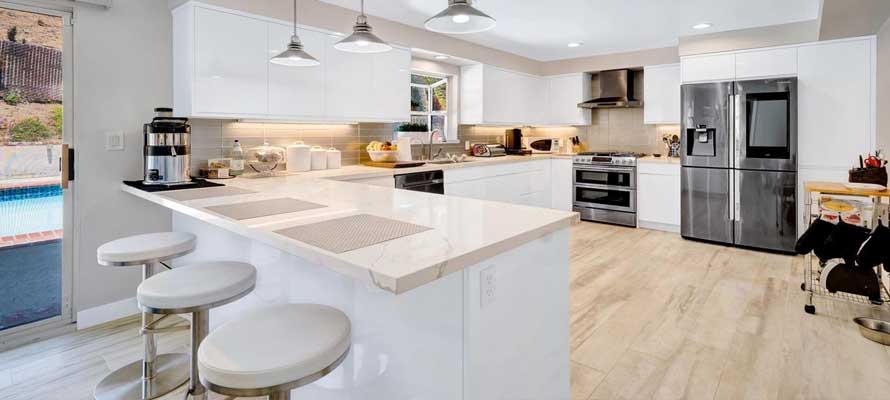
Low maintenance wins. Quartz requires nothing but wiping down — no oiling, no sealing, no seasonal conditioning. For busy households and homeowners who don't want to think about their countertop, quartz is the right answer. The wide range of styles — from Calacatta marble looks to concrete-gray to pure white — also makes it versatile across kitchen designs.
Choose butcher block if: you love the warmth of wood and accept the maintenance, you're doing a farmhouse or craftsman kitchen, you want to use it as an island accent, and you're committed to regular oiling in Prescott's dry climate. Choose quartz if: you want low-maintenance durability for a busy kitchen, you're doing full perimeter countertops, or you want a consistent pattern and predictable appearance.
Yes, but it requires careful sealing and maintenance. An undermount sink with a properly sealed, oiled butcher block surround can work — but it's the highest-risk location for wood due to constant moisture exposure. Many homeowners use quartz around the sink and butcher block on a separate island to get the best of both.
More often than manufacturers suggest. In Prescott's dry climate, plan to oil every 3–4 weeks initially and monthly after the wood is well-conditioned. Use food-safe mineral oil or a dedicated butcher block conditioner. Dry, cracked wood is much harder to restore than consistently maintained wood.
Quartz wins for resale in most markets. Buyers respond to the "low maintenance" narrative, and high-quality quartz photographs well. Well-maintained butcher block can be a selling point in the right kitchen style, but poorly maintained butcher block actively detracts from value.
Cambria, Silestone, Caesarstone, and MSI Quartz are among the most reputable brands. We source factory-direct and can access multiple brands at contractor pricing. During your consultation, we'll bring samples and help you compare options at your cabinet and flooring colors.
We'll bring samples to your home and help you compare butcher block, quartz, granite, and more. Free consultation in Prescott, Prescott Valley, and Chino Valley.